
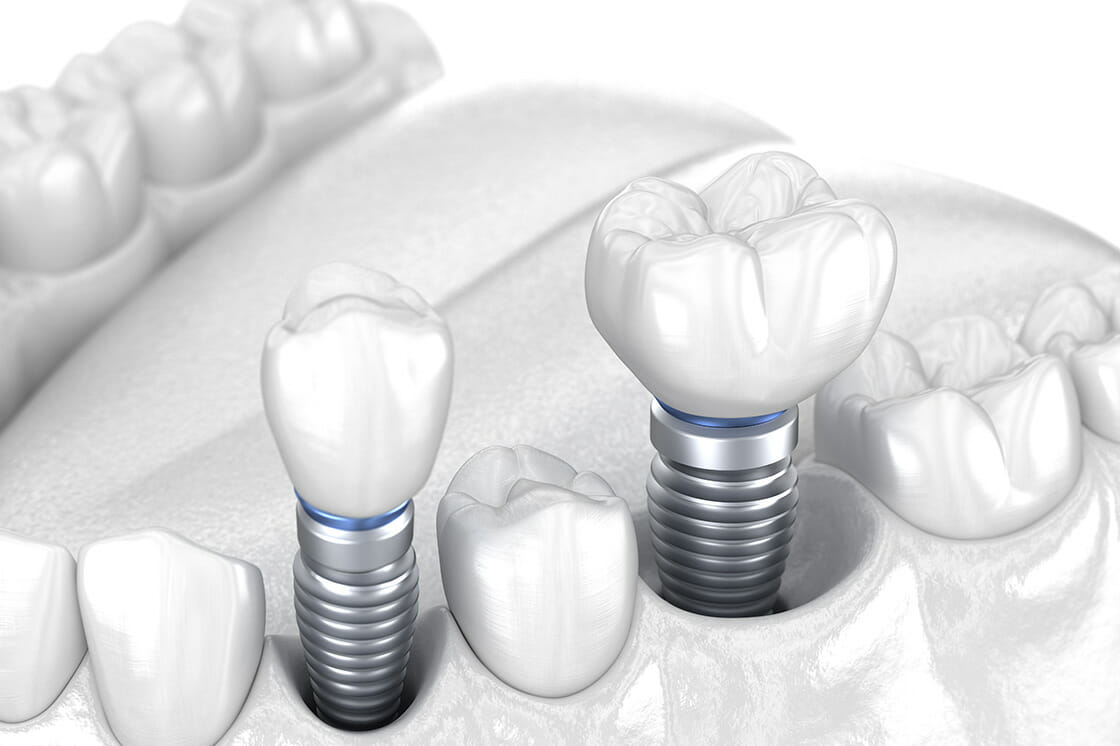
Though traditional crowns and bridges are a great option for patients who need to repair or replace a single tooth, there is another option as well. Crowns and bridges can also be placed by using an implant, which will provide a secure fit for your restored tooth.
How are implant crowns and bridges different from implant dentures?
Implant dentures encompass either the entire mouth or the entire top or bottom jaw. Implant crowns and bridges, however, only replace one or two teeth, similar to a traditional crown or bridge. If you need restorative work done to a few teeth as opposed to an entire mouth full of teeth, implant crowns and bridges may be a good option for you.
What part of the crown and bridge procedure does Dr. Mays do?
Dr. Mays will do every part of your procedure, except for the surgical implantation of the implant into your jaw bone. For this, she will recommend a variety of excellent oral surgeons who she knows and trusts. Once the implant has been placed in your jaw, Dr. Mays will take over the procedure. She will help create the false tooth that will sit on top of the implant and will place it in your mouth, teaching you how to remove it, clean it, and care for it. Dr. Mays will be with you every step of the way, educating you about the best options for sedation and long term oral health. Her patients’ comfort and confidence in her procedures is the most important thing to Dr. Mays.
How do implant crowns and bridges work?
Implant crowns and bridges are made of a false tooth meant to replace the damaged or lost tooth in your mouth. An oral surgeon will place an implant into your jaw bone that sticks up through your gums. The false tooth will sit on top of this implant, creating the impression of a natural tooth in your mouth. The implant creates a tight and secure fit and reduces rubbing and discomfort. The tooth can also be removed, which provides access to the gums for cleaning.
If you believe that this procedure is a good option for you, feel free to contact Dr. Mays’ office today. She can be reached by phone at 513-321-1102, or by email at janemaysdmd@gmail.com.
Implant Crown and Bridge FAQs
Dental implants can do more than replace a single missing tooth. Implant crowns and bridges provide stable, long-lasting solutions that restore both function and appearance without relying on nearby natural teeth for support. At Jane R. Mays, DMD, every restoration is carefully designed to blend naturally with your smile while supporting long-term oral health.
What are implant crowns made from?
Implant crowns are commonly made from durable materials such as porcelain or ceramic. These materials are chosen for their close resemblance to natural enamel while also providing the strength needed for everyday chewing and biting.
Will the crown match my natural teeth?
Yes. Implant crowns are custom-made to match the color, shape, and size of your surrounding teeth. Dr. Mays carefully designs each restoration to blend naturally with your smile and feel comfortable when you bite and speak.
Can an implant crown break?
Although implant crowns are made from strong materials, they can still chip or crack under excessive force, just like natural teeth. Avoiding habits like chewing ice or using your teeth to open packaging can help protect your restoration.
What is the difference between an implant-supported bridge and a traditional bridge?
A traditional bridge relies on neighboring teeth for support, which often requires reshaping healthy teeth. An implant-supported bridge attaches directly to dental implants instead. This approach helps preserve nearby teeth while providing additional stability and support for the jawbone.
How many implants are needed to support a bridge?
The number of implants needed depends on how many teeth are being replaced and where they are located in the mouth. In many cases, two implants can support a multi-tooth bridge, though larger restorations may require additional support.
How many teeth can you have on an implant-supported bridge?
Implant-supported bridges can replace several missing teeth in a row. The exact number depends on your jawbone health, the placement of the implants, and your overall treatment plan.
Are implant crowns cleaned like natural teeth?
Yes. Patients should brush and floss around implant restorations daily and continue to attend routine dental visits. Keeping the gums healthy is important for maintaining the long-term success of the implant.
How long do implant crowns and bridges last?
With proper care, implant restorations can last many years. Regular dental exams, good oral hygiene, and avoiding excessive wear all help extend the life of your restoration.
If you are missing teeth and want a stable, natural-looking solution, schedule a consultation with Jane R. Mays, DMD, to learn whether implant crowns or bridges are right for you.
