
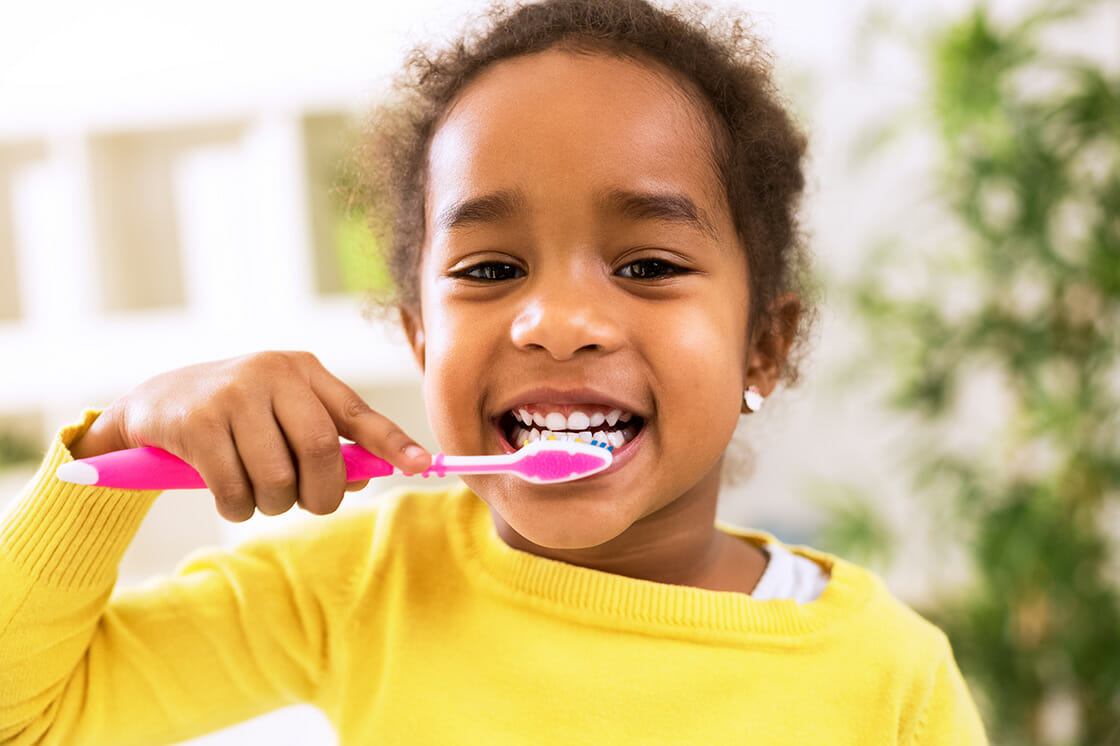
At Dr. Mays, your children’s dental health will come first. Our appointments are adapted to be kid-friendly, making sure that your child feels confident and comfortable in the hygiene room.
How often should my child go to the dentist?
Children should visit the dentist as often as adults should, which is every six months. The years between the ages of 6 and 14 are particularly cavity-prone years, which make regular dental visits and cleanings important. At your child’s visit, Dr. Mays will evaluate the health, growth, and development of their mouth, teeth, and jaw. It is important to monitor the development of your child’s entire mouth and jaw structure as they grow, and Dr. Mays will be sure to keep her eyes on your child’s development.
What are some things my child might need for their dental health?
Most children can benefit from preventive sealants when their premolars (baby teeth) and adult molars grow in. Sealants protect the chewing surfaces of your child’s teeth from decay which can decrease the chances of cavities.
Children also may need mouthguards to protect against sports-related jaw or mouth injuries. Any sport that includes any kind of contact, like football, soccer, and lacrosse, require a mouthguard. A custom mouthguard created specifically for your child will go a lot further than a generic mouthguard from a sports equipment store.
What will happen at my child’s first visit to the dentist?
Your child’s initial appointment with Dr. Mays will be approximately an hour-long, allowing plenty of time for Dr. Mays to evaluate your child’s current dental health, and to identify any potential problems. Dr. Mays will communicate your child’s dental needs clearly, listening to you every step along the way.
What can you do for children who get nervous about visiting the dentist?
At Dr. Mays’ Cincinnati office, we will work our hardest to make sure your child feels comfortable. Our staff has the experience to help your child feel calm and comfortable. We will explain each step of the procedure as it is performed if this helps to calm your child. Your child’s comfort is our number one priority.
Pediatric Dentistry: Frequently Asked Questions
Helping your child build healthy dental habits starts long before their first visit to the dentist. Dr. Jane Mays and her Cincinnati team love working with kids, and we want parents to feel just as confident as their children do. Below, we answer some of the questions we hear most often about caring for young smiles.
What’s the best way to clean my young child’s teeth?
Even before your child’s first tooth appears, gently wipe their gums with a soft, damp cloth after feedings. Once teeth come in, switch to a small, soft-bristled toothbrush and clean them twice a day. For infants and toddlers, parents should do the brushing, gradually letting children take over as their coordination improves, which typically happens around age six or seven, with supervision continuing a bit longer.
At what age is it appropriate for my child to start using toothpaste?
Children can start using toothpaste as soon as their first tooth erupts. Use a fluoride toothpaste no larger than a grain of rice for children under three, increasing to a pea-sized amount between ages three and six. Teach your child to spit rather than swallow toothpaste as soon as they’re able.
If baby teeth aren’t permanent, why do they need special care?
Baby teeth play an important role in your child’s development. They help with chewing and speech, and they hold space for permanent teeth to come in correctly. Untreated decay in baby teeth can lead to pain, infection, and even affect the health of the adult teeth growing beneath them. Caring for baby teeth sets the foundation for a healthy permanent smile.
Can thumb sucking impact my child’s teeth?
Thumb sucking is a natural reflex for many infants and young children, and it’s usually nothing to worry about early on. However, if the habit continues past age three or four, it can begin to affect tooth alignment and jaw shape. If you’re concerned about your child’s thumb sucking habit, Dr. Mays can offer gentle guidance on how to help them stop.
How can I help my child avoid cavities?
Consistent brushing and flossing, a balanced diet low in sugary snacks and drinks, and regular dental visits every six months all work together to prevent cavities. Preventive treatments like sealants and fluoride can add an extra layer of protection for cavity-prone teeth. Starting these habits early helps your child develop a lifetime of healthy smiles.
Schedule Your Child’s Next Visit
Building good dental habits early gives your child the best start toward a lifetime of healthy smiles. If you have more questions or it’s time to schedule your child’s next visit, our friendly Hyde Park team is happy to help. Call us today at (513) 321-1102 or request an appointment online.
